
MI Green Power Innovation Conference 2026–UK Workshop
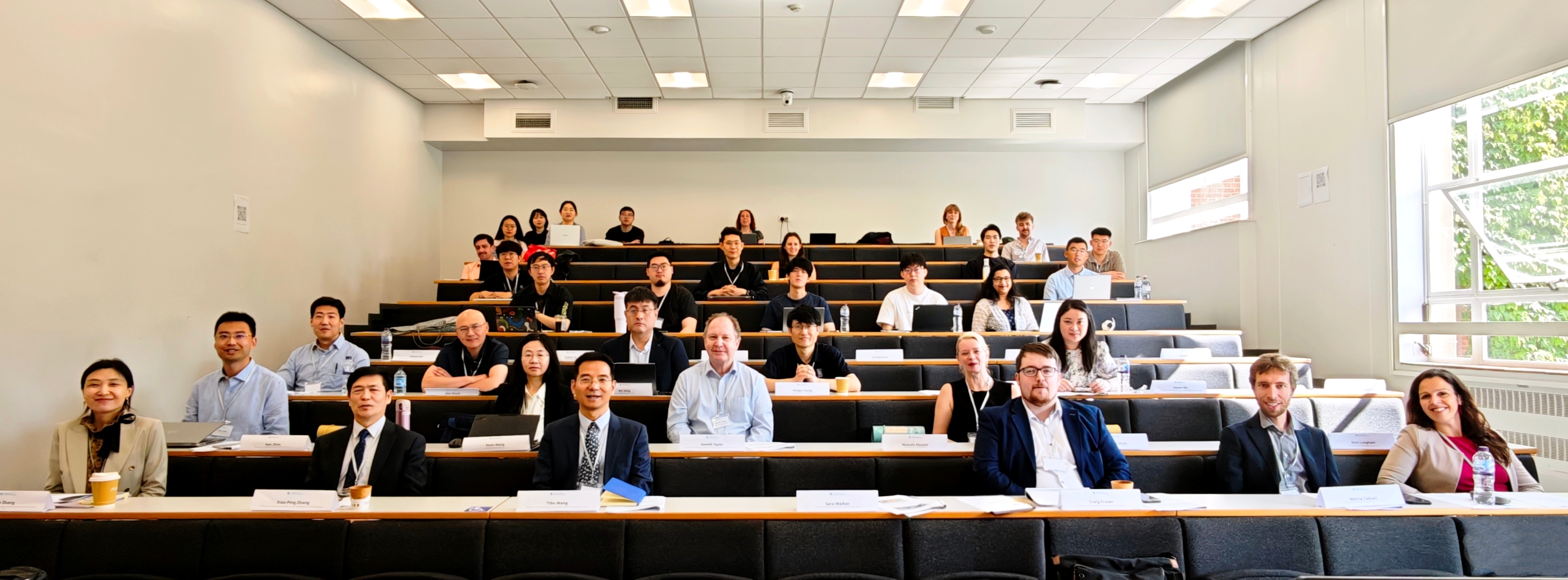
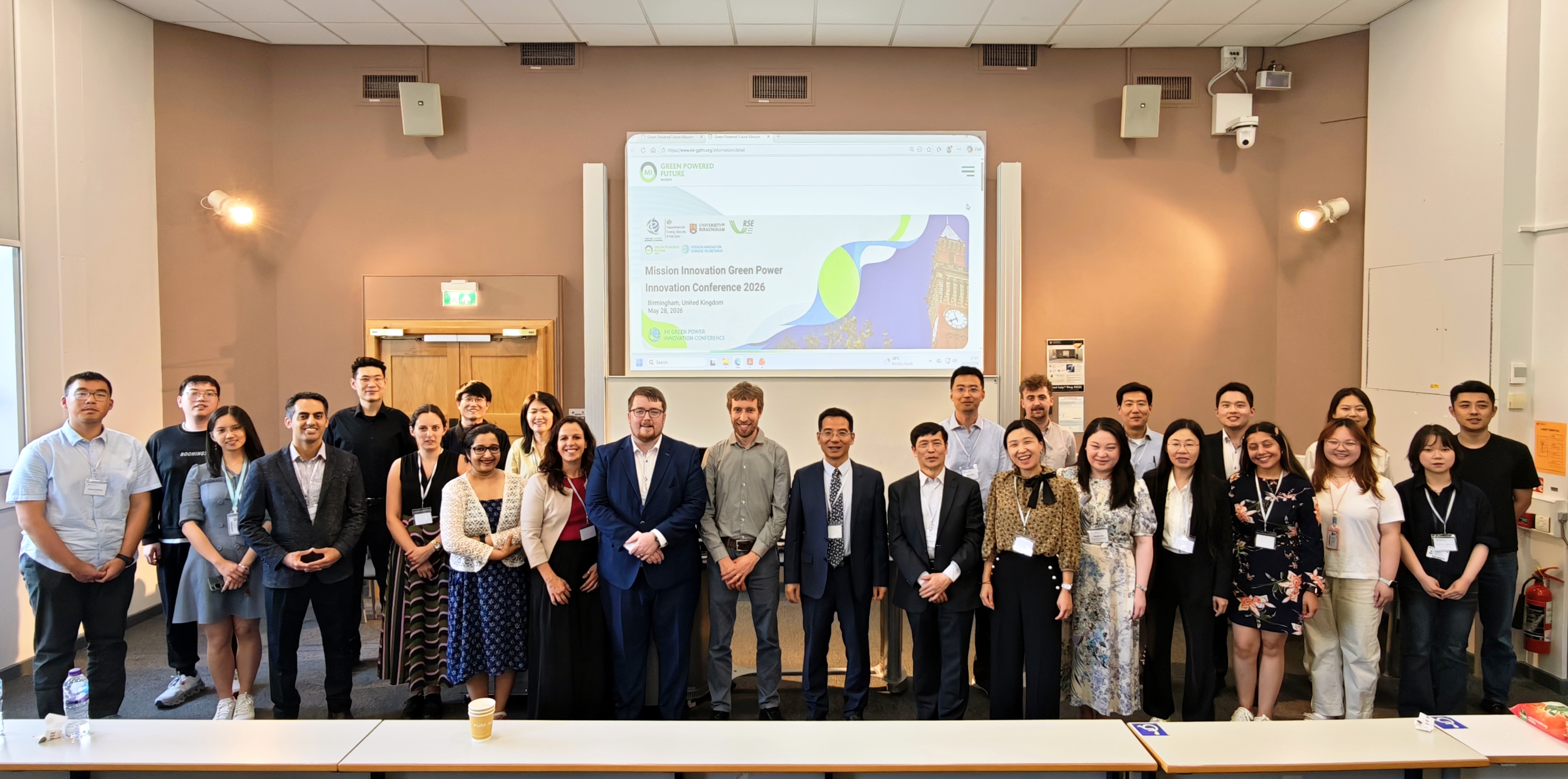
On May 27-28, the 2026 MI Green Power Innovation Conference (GPIC) UK Workshop was successfully hosted at the University of Birmingham.
This event was jointly organised by the Institute of Electrical Engineering, Chinese Academy of Sciences (IEECAS), the UK Department for Energy Security and Net Zero, the University of Birmingham and Italy’s Ricerca sul Sistema Energetico S.p.A. It received co-organisation support from the MI Chinese Secretariat (MICS) and the Green Powered Future Mission (GPFM) Coalition. Over 50 representatives from governments, industrial circles, academic institutions and research bodies gathered at the workshop to conduct in-depth exchanges and discussions on collaborative approaches for green power technological innovation. Prof. Sara Walker, Director of the Birmingham Energy Institute, delivered the opening remarks.
Nowadays, the large-scale integration of high shares of renewable energy has become a key challenge for the global energy transition, and building a flexible and resilient power system is a core industrial demand. Power sectors worldwide are confronted with common challenges, including drastic fluctuations in renewable energy output, insufficient grid regulation capacity and poor anti-disturbance capability of power systems.
Centering on the shared challenges in global power system decarbonisation, the GPIC Birmingham Workshop closely targeted two core priorities: the efficient integration of renewable energy and the construction of resilient power grids. It served as a high-level international cooperation platform for countries to learn from each other and jointly tackle technical difficulties in green power innovation. The workshop was divided into four sessions: keynote speeches on international cooperation, collaboration announcements, roundtable dialogues and thematic technical reports, bringing together experts from across the globe to share cutting-edge research outcomes.
I. GPFM International Innovation Cooperation Keynote Reports
The GPFM is the primary forum for strengthening intergovernmental cooperation on clean power innovation. It carries out joint research and demonstration around three major technical priorities: (i) affordable and reliable variable renewable energy; (ii) system flexibility and market design; (iii) data and digitalization for system integration.
A broad portfolio of initiatives has been rolled out by the GPFM, including the two flagship projects "FP1 – 5 Demos in Five Continents" and "FP2 – Multilateral Research Programme", as well as GPFM Toolbox—an online knowledge-sharing platform—and the Young Talents Exchange Program. The GPFM Coalition consists of 13 countries, 11 major international enterprises and 4 international organizations.
–Jia Zhang, Head of MI Chinese Secretariat (MICS), Senior Engineer, IEECAS, China
China leads GPFM Pillar 1, focusing on R&D and demonstration of renewable energy technologies. Focusing on cutting-edge areas such as next-generation photovoltaics, offshore wind power, integrated renewable energy, off-grid systems and system stability, China has made breakthroughs in principles and equipment for two core technologies: full DC collection systems and three-dimensional innovative wind power. Multiple prototypes and demonstration projects have been put into operation. Leveraging the international pilot base in Yancheng, Jiangsu Province, China has launched field trials including integrated monitoring for floating PV on water environments and tests on medium-voltage DC modules and fully undertaken the 5 Demos in Five Continents initiative of GPFM. China has also spearheaded the launch of the MI Green Power Innovation Conference series of international workshops, compiled in-depth Insight Reports on GPFM and built the GPFM knowledge-sharing Toolbox, providing technical and practical support for the grid integration of high-proportion renewable energy worldwide.
–Yibo Wang, Pillar 1 Lead, Researcher, IEECAS, China
Italy leads GPFM Pillar 2 on system flexibility and market design, wherein the research focuses on flexible power sources, grid and demand-side flexibility, energy storage grid integration, electric vehicles, as well as power market regulations. In Italy, on the base on national regulation demonstration projects about local flexibility markets have been launched. By different digital technologies, they are showcasing ho to coordinate distributed power generation, load and energy storage to support flexible grid operation.
Moreover, coalition members including China, Japan, the Republic of Korea, the UK and Spain, Italy have developed differentiated technical solutions covering flexible control of wind and solar units, planning of AC/DC power grids across voltage levels, and aggregation of residential heat pumps and household loads. The joint efforts help address grid stability and dispatching challenges brought by the large-scale integration of renewable energy.
–Mattia Cabiati, Pillar 2 Lead, Researcher, Ricerca sul Sistema Energetico S.p.A., Italy
The UK leads GPFM Pillar 3 on data and digitalization for system integration. This pillar focuses on interoperability standards, secure and resilient digital power grids and integrated platforms, with key research directions including data sharing and digital infrastructure for energy systems, and AI-enabled decarbonization technologies. These digital solutions break down data barriers between power generation, forecasting, operations and maintenance, and market mechanisms. The UK is also working on collecting a global suite of AI-based solutions for solving decarbonisation challenges to share with the Mission Innovation community. Similarly, the GPFM knowledge-sharing Toolbox facilitates the sharing of cases, data and research outcomes. Through delivering thematic technical reports and organizing regular online workshops, the GPFM continuously updates the priority list for digital innovation.
–Craig Fraser, Pillar 3 Lead, Department for Energy Security and Net Zero, UK
The Urban Transitions Mission (UTM) empowers decision-makers at all levels to advance the net-zero transition for cities through cross-sector systemic innovation. Centered on three pillars: zero-carbon city development, funding and capacity building, and urban scientific and technological research, the mission has established a global innovation alliance with governments, research institutions and industrial players worldwide to deliver key projects. Up to now, a total of 145 cities in 52 countries, including Yancheng, China, and Birmingham, UK, have joined the UTM city cohort. By coordinating technologies, talents and cooperative resources, a solution docking platform oriented towards practical implementation has been built to comprehensively accelerate the overall low-carbon transition of cities.
–Miriam Badino, Technical Coordinator, MI Urban Transitions Mission
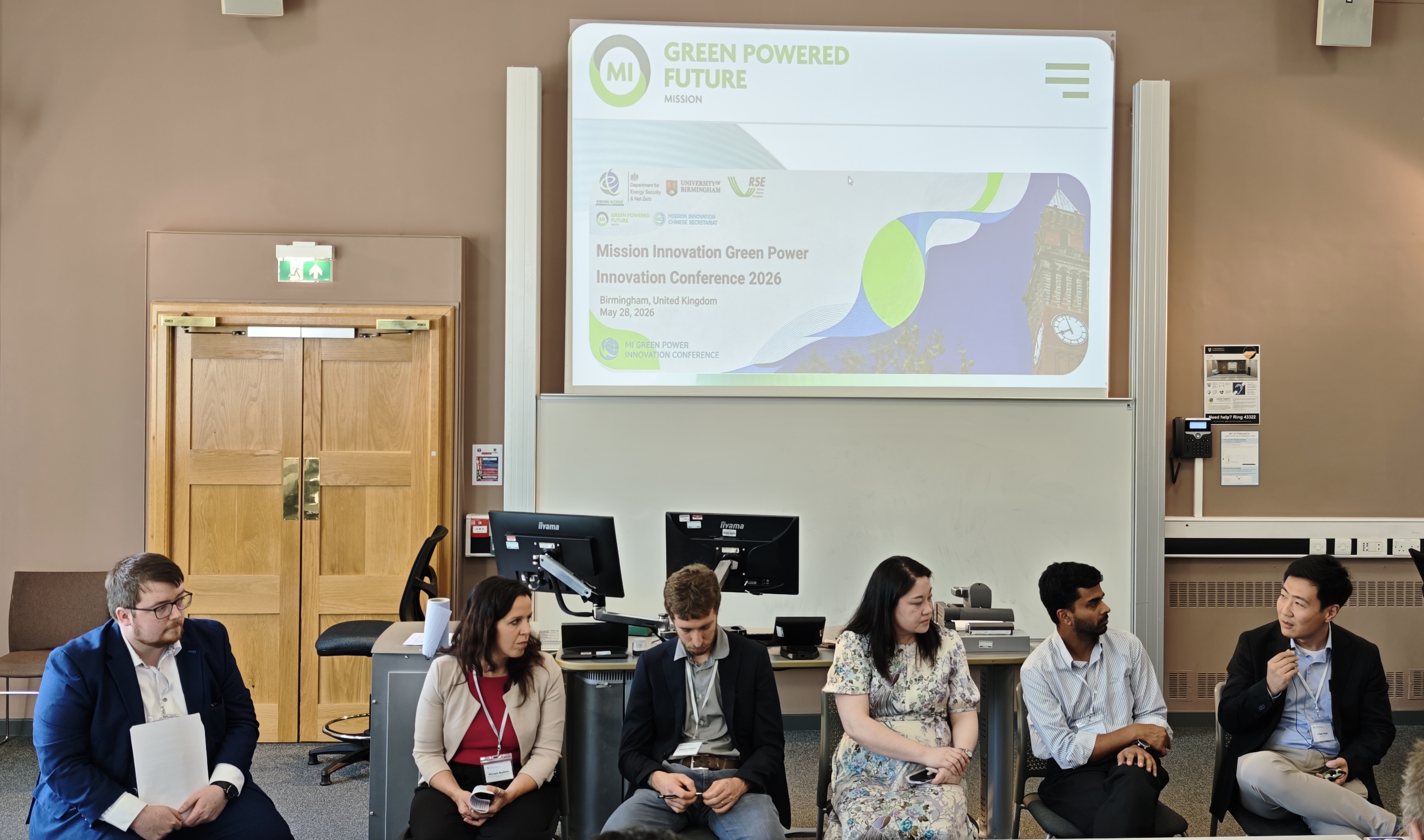
II. Panel Discussion: International Cooperation on Technology, Market and Regulation for Next-Generation Power Systems
The expert panellists discussed that international energy research currently faces issues including fragmented resources, duplicative studies and low efficiency in project implementation. There is a need to strengthen transnational coordination, clarify division of labour, and establish regular docking platforms so as to connect the whole industrial chain of innovation, verification and application and achieve efficient utilisation of resources.
The great value of AI technologies in power simulation, grid risk prediction and the intelligent upgrading of energy systems was also discussed in depth. The panellists identified existing drawbacks such as high energy consumption of computing power, lack of industrial standards and the digital divide. It is proposed to improve relevant regulatory and implementation mechanisms to ensure the safe and orderly application of intelligent technologies.
The dialogue defined potential directions for China-UK cooperation over the next five years. The two sides plan to deepen practical cooperation in three key areas: grid integration of renewable energy, R&D of long-duration energy storage technologies and industrial electrification. Relying on joint laboratory construction, two-way talent exchange and joint research projects, the partnership will help steadily advance global carbon neutrality goals.
III. Technical Session: Enhancing Flexibility and Resilience in Advanced Power Systems
Future Energy Systems Data Sharing Infrastructure and Digitalization: Relying on unified norms and standardised modelling to build a global energy data sharing system, enabling trusted data interoperability among multiple parties and supporting large-scale electric vehicle access and coordinated grid dispatch.
–Gareth Taylor, Director, Brunel Interdisciplinary Power Systems Research Centre, Brunel University of London, UK
Energy Quality for Renewable Energy Integration: From Theory to Practice: Relying on standardized quantitative indicators to measure the energy quality of wind–solar multi-scale power fluctuations, combined with market-based reward and penalty mechanisms and grid measurement, control and optimization measures, this offers a feasible path to solving the core grid-connection pain point of new energy output volatility and supply–demand imbalance.
–Xiaoping Zhang, Co-Director, Birmingham Energy Institute, School of Engineering, University of Birmingham
Technological Progress on HVDC Renewable Power Systems: Medium-voltage DC (MVDC) collection and networking solutions can effectively avoid problems of traditional AC wind and photovoltaic grid integration such as resonance, relatively high losses and insufficient weak-grid support. Related technologies have completed real-world verification in multiple locations and are suitable for construction of large wind–solar bases.
–Huan Wang, Associate Researcher, IEECAS, China
PAS1878, as the UK’s benchmark standard for energy smart appliance (ESA) interoperability, has been revised and expanded in this round to include vehicle-to-grid (V2G) and household energy storage equipment specifications, improving interconnection and data security details, breaking cross-platform access barriers and releasing residential peak-shaving value. The UK will deepen implementation and promote international application of this standard.
–Rebecca Shutt, Department for Energy Security and Net Zero, UK
Analysis of Multi-rotor Wind Turbine Performance and Key Technologies Investigation: Multi-rotor wind turbines utilize aerodynamic coupling between rotors to achieve synergistic efficiency gains and break through the traditional Betz limit. This technology not only improves power generation efficiency by more than 10% but also enables unit lightweighting and load reduction, thereby overcoming the bottlenecks of ultra-large conventional units in size, weight and reliability and strongly supporting high-power wind power development.
–Bin Song, Senior Engineer, IEECAS, China
The UK relies on multiple market-based means such as short-term electricity markets, capacity auctions, cross-border grid interconnections and large-scale demand-side response to activate system flexibility and efficiently integrate high proportions of wind and solar renewable energy.
–Anders Hove, Senior Research Fellow, Oxford Institute for Energy Studies, UK
IV. Technical Session: Smart Technologies and Substantial Solutions for Future Power Grids
High-temperature superconducting motors, with their high-power density advantages, can streamline the volume and rare-earth material consumption of wind power direct-drive units while adapting to the R&D of hydrogen energy transportation power equipment, contributing to low-carbon transformation in both the wind power and transportation sectors.
–Hongye Zhang, Assistant Professor, University of Edinburgh, UK
Augmented-reality-based grid frequency modulation control technology can link wind power and hydrogen production loads for flexible power regulation. Relying on algorithms, it enables wind farms to rapidly participate in grid frequency modulation without the need to add energy storage facilities.
–Mostafa Kheshti, Associate Professor, University of Warwick, UK
Case studies from countries including the UK, Italy, China, Spain, Japan and South Korea show that, through technical pathways such as AC/DC grid optimization, wind–solar coordinated control, household flexible load aggregation, vehicle-to-grid station implementation and market-oriented distribution network management, combined with construction of localized flexible power markets, grid adjustable resources can be fully tapped.
–Mattia Cabiati, GPFM Pillar 2 Lead, Ricerca sul Sistema Energetico S.p.A., Italy
Multi-axis configurations combined with machine-learning prediction and optimization of power take-off (PTO) control systems, paired with energy storage converter grid-forming schemes to smooth wave power fluctuations, effectively solve the stability challenges of wave power grid integration.
–Nan Zhao, Senior Lecturer, School of Engineering, Lancaster University, UK
Minimized Grid Forming Control (MinGFM) technology relies on coordinated control of wind turbine rotor kinetic energy, reactive power compensation devices and offshore DC networking to achieve grid-forming voltage stabilization without adding extra energy storage. Related research outcomes can provide technical support for grid connection standard revisions and market implementation of new frequency modulation mechanisms.
–Yichen Liu, Senior Power System Engineer, UK National Energy System Operator
Building Integrated PV: Simulation, Design, and Technology: By establishing light–electric–thermal coupling and wind–snow load simulation models and independently developing dedicated simulation design software for building integrated PV, various building PV installation schemes can be accurately matched, supporting large-scale implementation of building integrated photovoltaics.
–Chen Huo, Assistant Researcher, IEECAS, China
Cooperation Agreements
During the workshop, IEECAS and Brunel University London formally signed a cooperation agreement to jointly build the China-UK Green Power Technology Joint Laboratory. Meanwhile, IEECAS and Italy’s Ricerca sul Sistema Energetico S.p.A. jointly launched the China-Italy GPFM Young Talents Exchange Programme, setting up a long-term platform for scientific research innovation, talent training and technical exchanges in the green power sector.

Taking full advantage of being in the UK, the IEECAS team visited Tyseley Energy Innovation Park in Birmingham, the University of Warwick, the University of Oxford and Brunel University of London, conducting in-depth exchanges on offshore wind power, green hydrogen production, long-duration energy storage and smart grids. Details will be provided in subsequent reports on the UK technology visit series.

Summary and Outlook
The successful holding of the 2026 MI GPIC Birmingham Workshop marks a fruitful practice of multilateral collaborative innovation in the global green power industry. The event enabled participating countries to share cutting-edge technologies and practical experience in building new power systems. Through tangible initiatives including joint laboratory construction and talent exchange programmes, a regular international cooperation mechanism has been established. The workshop also clarified the development path for cross-border technological co-development, resource sharing and research achievement promotion.
Looking ahead, all participating parties will continue to rely on the GPFM Coalition to deepen in-depth practical cooperation. Joint research, technology commercialisation and talent exchanges will be carried out continuously to bolster the high-quality development of new power systems. The partnership will also inject strong momentum into the global green energy transition, the delivery of dual carbon goals and international climate governance.
Other News
-

GPFM & CHM Joint Workshop: Advancing Power and Hydrogen Synergies through Technologies, Policies, and Global Collaboration
On 4–5 February 2026, the Green Powered Future Mission (GPFM) and the Clean Hydrogen Mission (CHM) co-organized a joint workshop on "Advancing Power and Hydrogen Synergies through Technologies, Policies, and Global Collaboration".
March 13 2026
-

The GPFM Workshop: Policy and Technology for Grid Digitalisation
The GPFM Workshop on "Policy and Technology for Grid Digitalisation" was organized by Japan's Ministry of Economy, Trade and Industry (METI) on February 18-19, 2025, which gathered representatives from international organizations, national governments, power utilities, research institutions and technology providers from Spain, Canada, Japan, Italy, the UK, Australia and South Korea.
March 13 2026
-
MI Annual Gathering 2025
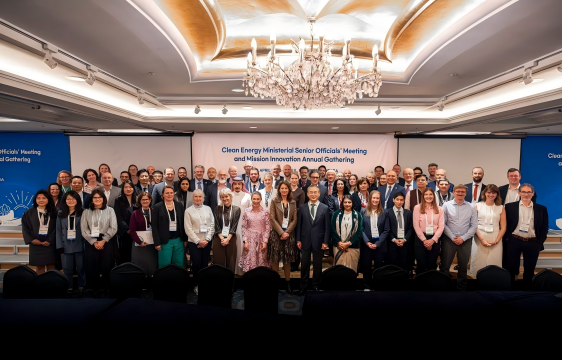
The GPFM is thrilled to have actively participated in the MI Annual Gathering and Clean Energy Ministerial (CEM) Senior Officials' Meeting held from 9-11 April, 2025 in Seoul, South Korea. The three impactful days in Seoul were rich with strategic roundtables, breakout sessions, plenary meetings, workshops and networking opportunities aimed to advance collaboration for the development and deployment of clean energy technologies. These lively conversations and crucial discussions will certainly pave the way for joint actions leading up to the CEM16/MI-10 Ministerial in Busan, South Korea, this August.
April 11 2025